

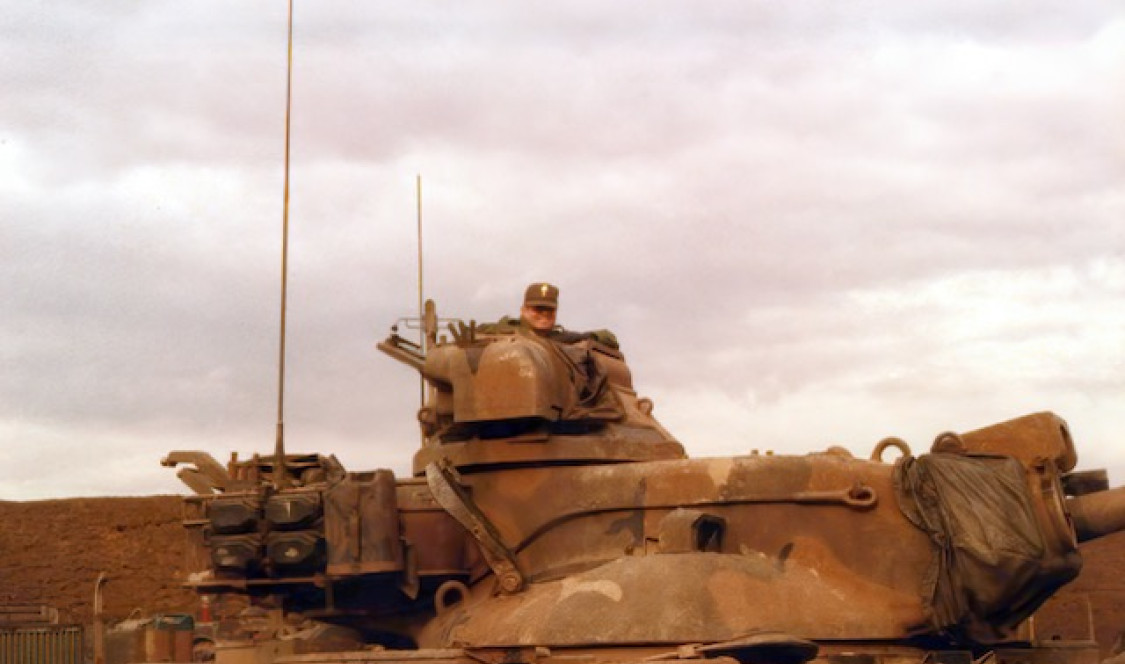
Today Gary Anderson ’76 is a French citizen living in Chambéry, about 90 kilometers south of Geneva. He has a memory of both the good and bad in his life. He remembers those people he admires and those that have helped him in hard times. He remembers the people he has seen struggling to survive and has painful visions of their suffering. He also remembers the people that have annoyed him. These and other fascinating stories are all a part of Gary’s military and civilian careers.
Gary Anderson ’76 chose CMC because it had a reputation for political science, conservatism, and being an elite college. Today, he admits he thought of himself as elite and did not appreciate or take advantage of all the school had to offer, but he was 17 years old, had a high opinion of himself, and was socially inept. He thought joining ROTC was a good thing to do because of family influence. His family had a long military history dating back to the Civil and Revolutionary Wars.
Gary started the 2-year ROTC program at 19 and enjoyed his classes. He recalls a vivid memory of a story told by one of the ROTC cadres about an officer in Vietnam experiencing his first attack on a fire base. The officer ran out of his quarters, dove into his bunker, but forgot his M16. He ran back and grabbed his rifle returning to the bunker. This time he forgot the ammunition! He went back to his quarters, grabbed the ammunition, and calmly walked back to his firing position. Gary appreciated that ROTC training conveyed real life stories about handling situations under extreme stress.
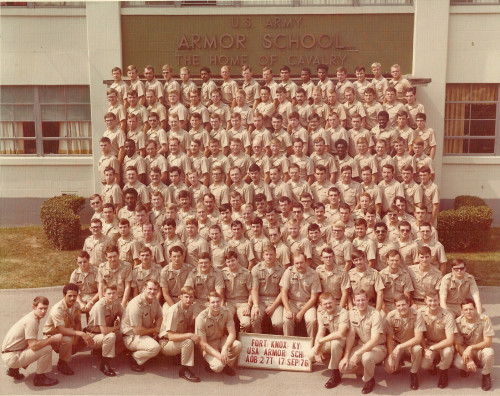
His two ROTC drill sergeants from ROTC Basic Camp at Ft. Knox, Kentucky stand out in his mind. He remembers them for their natural leadership talent (or lack thereof), something he had never encountered before. One respected sergeant would tell the cadets to jump and they all would – never asking questions. The other was a bully and tormented the cadets. He got no respect.
During his rigorous ROTC Summer Camp at Ft. Knox (affectionally known as the post that is “100 miles from nowhere and two feet above Hell”), his training commander told him: “We can’t kill you, but if we could, we can’t keep the bodies!” He learned much from the practical stories his instructors’ presented about planning, checking, forgetting, and doing things right.
Gary chose Armor for his branch. He did so because he saw a lot of Infantry people coming home from Vietnam with pieces missing and Gary had a feeling that being in the tank meant “getting home in one piece or not at all.” During a lecture at Armor Office Basic (AOB) course, he heard a memorable story. “As an Armor/Cavalry officer, when you see the Indians attacking the wagon train, you can draw your saber and sound charge, or you can stand there and silently watch. One thing you can’t do is to root for the Indians.” The other useful observation that he heard was about maintenance while standing next to a M113 track: “You will get court-martialed for bad maintenance but never for bad tactics.” That sentence reminded him of the Custer story.
Gary continued his training discovering that the Army had classified him as a native Eskimo and paratrooper! He was neither, but it took more than two years for the Army to change his records despite repeated requests. After basic branch training, Gary received orders assigning him to the 1st Battalion, 32nd Armored Regiment, 3rd Brigade, 3rd Armored Division in Friedberg, West Germany. Gary admits that as a new Second Lieutenant he was scared to death and lacked self-confidence. On December 26, 1976, he flew from LA to Paris, spent a few days in Paris with his future wife, and on December 30, Dec 1976, took a train to Chambéry. On the 3rd of January 1977, he took a lot of trains from Chambéry to Geneva, Geneva to Basel, Basel to Frankfurt, Frankfurt to Friedberg. Arriving after midnight at the train station in Friedberg, the MPs picked him up and took him to Ray Barracks. He was exhausted and spent the night sleeping on the couch in his Battalion Commander’s office.
Assigned as the third platoon leader in Charlie Company, he gradually became accustomed to the routine. His Company Commander had been a “Bird Dog” Pilot in Vietnam (flying fix wing planes used for spotting artillery). He found camaraderie among his tank commanders and began to settle down. He enjoyed being a tank platoon leader. It was a maturing experience, and he learned from his NCOs. Always on the go, he was moved to take over the first platoon after a year. A good friend and also the 2nd Platoon Leader was a “Water Walker.” This was a West Point graduate, with a bright future ahead, and an excellent officer that Gary enjoyed working with. Gary remembers another West Pointer in his company who was an intelligent officer but had no common sense. During a live fire exercise at Hohenfels the officer spent hours trying to get one of his tank’s radio to work. He fiddled and fiddled with the controls but to no avail and the whole platoon was disqualified. The sergeant in the tank with the bad radio was so angry at failing the exercise that he kicked the radio which suddenly came alive. Another time, Gary witnessed the same lieutenant running after a searchlight bouncing down a steep hill. Apparently, the officer’s tank had run into a tree and knocked the searchlight loose.
Gary’s next assignment was as the Support Platoon Leader. It was his job to bring various types of ammunition from the Ammo Dump out to the tanks and machine guns for live fire exercises. While Gary had been comfortable being a tank platoon leader, this job required him to report to many “masters”: the S4 (supply and maintenance), the S3 (operations), the Battalion Executive Officer and the Headquarter Company Commander. Even though Gary outranked the S4 he learned that the man was an expert at his job, had been a former police officer, and had no problem in forging the Battalion Commander’s signature. Gary found that he did not have enough drivers for the heavy “Goer” vehicles that carried ammunition. He applied for a military driver’s license so he could fill in when necessary but was prohibited by a former Chinook Pilot Captain from Vietnam who stated, “Officers are not supposed to drive vehicles; if you want a license you’ll have to get the Battalion Commander’s approval.” Gary drove the vehicle anyway and one day soon thereafter witnessed his Battalion Commander driving his own jeep passing on the opposite side of the road. This experience taught Gary to never trust the type of officer who would put career before mission.
In this role, Gary had many responsibilities and many experiences. There was the Scout Platoon Leader who arranged with Gary to have ammunition that he had collected for several months transported to the Wildflecken Ammo Dump, an hour’s drive from Friedberg. He came to work in the morning and found a used but not completely expended Dragon Antitank Missile sitting on his desk. Gary called the EOD (Explosive Ordinance Disposal) to take care of it. Then there was the Platoon Leader who was in a panic because he lost his code book during an alert exercise. And the supply clerk whose German wife hung herself in their quarters. Years later Gary learned that the soldier had been dealing drugs and that is why his wife hung herself. Gary was scheduled to be the pay officer for his company on the same day his wife gave birth to their first child. His Company Commander told him it was OK to forego the duty. The next day after no sleep, he was called by the First Seargeant informing him that he needed to go pay the troops. When he went to pick up the cash, he was informed that he was not the list to be one of the pay officers.
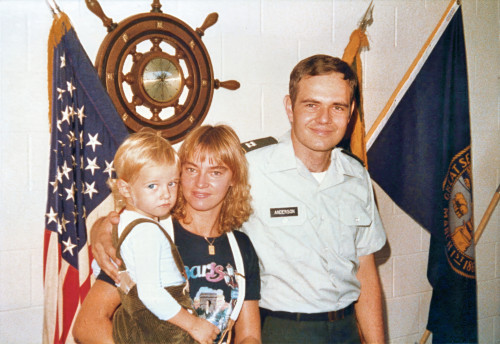
Gary was happy to leave Germany and return to Ft. Knox for the Officer Advanced Course. After six months, he was assigned to the 1st Battalion, 4th Training Brigade at Ft. Knox. He learned a lot from his 1st Sergeant who was an excellent Special Forces NCO and knew how to motivate the trainees. His next assignment was work in the “Skill Qualification Test Branch (SQT)” that produced tests to determine a tanker soldier’s proficiency in his military occupational specialty (MOS). He worked with a mixed military and civilian crew to develop, create, illustrate, test, and statistically validate the examinations. From this experience he learned that the easiest way to develop a procedure is to break it down into three parts: Task, Objective, and Standard. Task is what to do. Objective is why do it. And Standard are the steps that define how the task is accomplished.
Gary wanted to stay in the service and return to Germany where most soldiers were professionally oriented and few deserted, but he could not get a straight answer from the Armor Officer Career Branch. They told him, “You probably won’t go back to Germany because we need officers at Fort Hood, Texas. Nevertheless, you have not done a short tour yet. So, you could be going to Korea. But, after that you may end up in Germany again.” This was sufficient confusion for Gary to put in his resignation after serving for six years. Gary left the Army at 28 and made the decision to move to Chambéry, France where his wife was from. He spoke only two words of French at the time but watched TV commercials and studied lessons from a grammar book. He could not get a work permit due to a French civil servant who made up rules that were convenient to him. So, in April 1984, he returned to San Diego and enrolled in a private computer school to learn programming. The school was held in an old bowling alley and in 8 months Gary had learned Assembler language, Cobol, PL1, RPG, CICS, and Database technologies.
Then followed a period of trying to find a suitable position that would support his family. Gary comments, “I learned the techniques for how to interview and get hired: tell them that you know how to do the work whether you do or not.” Finally, he landed a position with Perkins-Elmer, the company that made the Hubbel Telescope. He worked for the company for 10 years in the Instruments Division and became known as “a fixer.” There were several important lessons he took away from this experience: (1) Never trust a computer’s output; (2) Do your due diligence and don’t take shortcuts; and (3) Always test for failure.
In 1994, he accepted a position with Marquette Medical. The corporate headquarters in Wisconsin had a 7-man computer shop providing services to 2000 employees and Gary, working from Paris, was responsible for the computer operations in Europe. This job taught him a lot about corporate politics. The Chief Information Officer in Milwaukee wanted Gary to move to Germany and sort out some personnel issues there. Since he did not speak German, Gary believed that this was an undoable job and ultimately left Marquette.
Gary had a short stay with Oracle as a support engineer in direct contact with customers using a product called Oracle Applications that ran manufacturing operations. He came away with a wealth of understanding about “how computer stuff works,” and in 2003 decided to strike out on his own as a computer consultant. He had some amazing experiences working with some Russians who knew how to hack into systems. It was an impressive group that wanted to know all about procedures – but never bothered to read the documents.
In 2004, Gary opened his own shop with a company name of “Amerlok” which is French slang for “an American.” Gary’s specialty is to “unhack” things. He attended a SANS Course having to do with special security and computer system audits. He wrote a 100-page paper on how to audit Microsoft’s Internet Security and Acceleration Server. He’s tackled many projects as a consultant and worked with several French hotels to install network and wireless systems.
In 2016, Gary decided to apply for French citizenship and encountered both French and American bureaucracy in all its glory. The French government required a notarized copy of his birth certificate, translated into French, and another document called an “apostille” certified that the county registrar who signed the birth certificate was officially authorized to do so. To obtain this apostille, the Office of the Secretary of State of California requires a $20 payment from a US bank account or a money order; nocash or credit cards accepted. Gary did not have a U. S. bank account and US money orders cannot be purchased outside of the United States. So, Gary decided to celebrate his wedding anniversary in New York. While there, he went to the Post Office and bought a money order. California produced the apostille in English, Spanish, and French. But the French authorities required that apostilles to be translated by a court-appointed translator. So, the apostille was translation from French into French.
Total cost of these transactions (including the four days from Paris to New York and back) was over $2500 and total time spent to obtain appropriate citizenship documentation was 4 months. Finally, just before Christmas 2016, Gary received his official French birth certificate and certificate of French citizenship in a ceremony at Versailles. Now, he is happily retired in Chambéry with his wife and an abandoned cat named “Cat” that he rescued four years ago. He enjoys the ambiance of this romantic and history-filled city, running 10Ks while listening to books like “Vietnam Combat” and “The Anti-Federalist Papers”, and then savoring a glass of Mondeuse Arbin at his favorite restaurant by the lake.
Gary’s list of Life Lessons Learned parallels his experience with good and bad people and good and bad experiences.
- Be careful about blind hate of someone. One day one of those people may save your life.
- Some people can talk the talk but can’t walk the walk. Good leaders must do both.
- Learn to roll with the punches and keep self-esteem down to earth. Don’t be afraid to make mistakes.
Remember that systems are created to solve a problem, but they remain in place even when that problem no longer exists.