Marian Miner Cook
Athenaeum

A distinctive
feature of social and
cultural life at CMC


Current Semester Schedule

Athenaeum events are posted here as detailed information becomes available.

Wed, April 29, 2026
Dinner Program
A conversation with Shaun Maguire and Jason Rosenthal

Join us for a rare, unfiltered conversation with Shaun Maguire, General Partner at Sequoia Capital — one of Silicon Valley's most consequential and unapologetically outspoken venture capitalists. Shaun's life story defies every template: a 1.8 GPA, an F in Algebra II, and a path that somehow led to a PhD in quantum gravity from Caltech, co-founding a billion-dollar cybersecurity company, a deployment to Afghanistan with DARPA, and a front-row seat to some of the most important technology bets of our era — SpaceX, xAI, Stripe, and beyond.

Read more about the speaker

But this isn't just a career story. Shaun believes the West is in the fight of its life — culturally, geopolitically, and technologically — and that the decisions being made right now in boardrooms, dorm rooms, and on college campuses will determine whether Western civilization thrives or retreats. This is a conversation about optimism with teeth: the idea that building the future requires not just great technology, but moral clarity, intellectual courage, and the willingness to say hard things out loud.

Jason Rosenthal is an Operating Partner at a16z crypto. Jason has spent more than 25 years as an internet entrepreneur and executive, including more than 10 years as a startup CEO, and his career has been dedicated to the development of transformational new platforms. Jason works closely with the CEOs and founders in our crypto portfolio to provide leadership guidance, help them plan for and react to the aspects of running companies in rapidly-changing markets, and generally help them become the best version of their professional selves.

Whether you're thinking about starting a company, joining one, you aspire to become a world class investor, or are simply trying to figure out what you stand for — this is the conversation you don't want to miss.

This event is sponsored by the Open Academy at CMC.

Read less
Tue, April 28, 2026
Dinner Program
Zach Ingrasci ‘12, Rohan Mathew '27, and Talin Tyvand ‘27

In partnership with the award-winning film studio Optimist, founded by CMC alumnus Zach Ingrasci '12 – who began his journey in film with Chris Temple '12 by making a documentary during the summer of his Junior year – we invite you to an inspiring showcase celebrating storytelling and creative careers. Optimist’s second cohort of Creative Fellows, CMC students Talin Tyvand '27 and Rohan Mathews '27, will share exclusive clips from the award-winning films they have supported and reflect on their experiences over the last year with Optimist, culminating in the announcement of next year’s fellows! The event will also feature a dynamic panel discussion with industry-leading alumni who will share their journeys, key lessons, and insider advice on launching a creative career. Whether you're a filmmaker, actor, writer, journalist, or simply curious about nurturing your creative skills, this event will have something for you!

Read more about the speaker

Zach Ingrasci '12 is a film director and the co-founder of the twice Emmy-Nominated film studio Optimist, a production company committed to making documentaries that nurture optimism and create impact. Best known for directing the feature documentaries Living On One Dollar, Salam Neighbor, This Is Not Financial Advice and Five Years North, Zach’s films have been released by Netflix, Amazon Prime, National Geographic, PBS and HBO. Every Optimist film is accompanied by an impact campaign to create measurable outcomes. His projects have raised over $119 million for the films’ causes and have changed over 606,869 lives.

Read less
Tue, April 28, 2026
Lunch Program
Rachel Fenning and Chloe Martinez

Join the Center for Writing & Public Discourse and the Claremont Autism Center for a lunchtime panel exploring ADHD, neurodivergence, and the writing process. Professors Rachel Fenning and Chloe Martinez will host an informal, student-centered conversation and Q&A, discussing how neurodivergence shapes experiences with writing and academic work. Grounded in both research and lived experience, the panel will highlight strengths-based approaches and practical strategies for getting started, sustaining focus, and completing writing tasks.

(Parents Dining Room)

Read more about the speaker

Rachel Fenning, Professor of Psychological Science and Director of The Claremont Autism Center at CMC, is a licensed clinical psychologist with particular expertise in assessment and intervention for individuals with neurodevelopmental differences, including autism. Her research examines child and family contributions to social emotional development, biobehavioral regulation, and clinical outcomes in children with autism and related intellectual and developmental disabilities (IDD). She also develops and tests interventions designed to promote physical health, adaptive behavior, and well-being in underserved autistic children and their families. Her work has been funded by the National Institutes of Health and the Health Resources and Services Administration. She is a former President of Division 33 (IDD/ASD) of the American Psychological Association, and she serves on the Editorial Board of Psychological Assessment and Research on Child and Adolescent Psychopathology.

Chloe Martinez, Associate Director for Programming at the Center for Writing & Public Discourse and Lecturer in Religious Studies at CMC, is the coeditor, with Lisa Van Orman Hadley, of Chaos, Creativity, Completion: New Approaches to Writing and ADHD (University of Chicago Press, 2026); translator of Blue Like My Beloved: Poems of Mirabai (New Directions, October 2026); and author of the poetry collection Ten Thousand Selves and the chapbook Corner Shrine. Her research on religion has appeared in journals including The Medieval History Journal and South Asia​, and has been funded by organizations including the Woodrow Wilson Foundation, AIIS, and SSRC-Mellon Mays. A 2026 National Endowment for the Arts Literature Fellow in Translation, she is assistant editor at Beloit Poetry Journal and poetry editor at the Journal of Feminist Studies in Religion.

Read less
Mon, April 27, 2026
Lunch Program
J.D. Rackey

Public frustration with Congress has been the status quo since the institution’s very first days. Many point to constant gridlock and high levels of partisanship as the main problems that have led to Congress’s recent decrepitude. While partisanship and gridlock do impact Congress’s ability to be a responsive and representative body, an often underdiscussed problem is that of the institution’s internal capacity. What resources does Congress need to effectively, efficiently, and transparently meet the needs of the American people? What incentives drive member behavior and how can the day-to-day workflow of the institution be altered to drive more bipartisan policymaking?

(Parents Dining Room)

Read more about the speaker

J.D. Rackey is the associate director of the Structural Democracy project at the Bipartisan Policy Center where he leads their work on governing institutions and electoral systems reform. His research focuses on the politics and procedures of the U.S. Congress with an emphasis on congressional capacity and modernization. Rackey’s work has appeared in scholarly journals such as Political Science Today and Social Science Quarterly and has been published or cited in popular press outlets such as The Washington Post, The Wall Street Journal, The Hill, and CQ Roll Call. He also currently serves as president of the National Capital Area Political Science Association.

Rackey previously served as professional staff with the U.S. House of Representatives Select Committee on the Modernization of Congress. He has also been an adjunct lecturer at Georgetown University. He earned his Ph.D. in Political Science from the University of Oklahoma and is a former American Political Science Association Public Service Fellow.

Read less
Wed, April 22, 2026
Dinner Program
Daniel Libeskind

“Without memory we would not know where we are going or who we are—Memory is not a sideline for architecture, it's the fundamental way to orient the mind, the emotions, and the soul.”
—Daniel Libeskind

Daniel Libeskind is an internationally renowned architect and urban designer whose work spans cultural landmarks, museums, commercial institutions, private homes, and object design. Best known for the Jewish Museum Berlin, the Denver Art Museum, and as the master-plan architect for the World Trade Center site in New York City, Libeskind is recognized for creating buildings that resonate far beyond their physical form. His philosophy is rooted in the belief that architecture is infused with human energy and that buildings embody and communicate the cultural context in which they exist. Drawing on his deep engagement with philosophy, literature, art, and music, Libeskind expands the scope of architecture into a multidisciplinary reflection on human experience. In this keynote, he will reflect on how memory, history, and culture shape the built environment. Highlighting projects such as the Jewish Museum Berlin, the Military History Museum in Dresden, and social housing in Brooklyn, Libeskind will explore architecture as both a vessel of memory and a foundation for resilience.


Photo credit: Stefan Ruiz

Read more about the speaker

Polish-American architect Daniel Libeskind is an international figure in architecture and urban design. Informed by a deep commitment to music, philosophy, and literature, Libeskind aims to create architecture that is resonant, original, and sustainable.

Libeskind established his architectural studio, Studio Libeskind, in Berlin, Germany, in 1989 after winning the competition to build the Jewish Museum in Berlin. In February 2003, Studio Libeskind moved its headquarters from Berlin to New York City to oversee the master plan for the World Trade Center redevelopment, which is being realized in Lower Manhattan.

Libeskind’s practice is involved in designing and realizing a diverse array of urban, cultural, and commercial projects around the globe. The Studio has completed buildings that range from museums and concert halls to convention centers, university buildings, hotels, shopping centers, and residential towers. As Principal Design Architect for Studio Libeskind, Libeskind speaks widely on the art of architecture in universities and professional summits. His architecture and ideas have been the subject of many articles and exhibitions, influencing the field of architecture and the development of cities and culture.

Libeskind has won dozens of awards for his work including the Goethe Medal, the Hiroshima Peace Prize, the Dresden Peace Prize, and the European Union Prize for Civil Rights.

Mr. Libeskind's Athenaeum presentation is co-sponsored by the President's Office and the President's Leadership Fund.

Photo credit: Stefan Ruiz

(Special Note: This event had originally been scheduled for Wednesday, November 5, 2025. We are honoring the head table sign-ups from that original date. Students who had secured a head table spot (or were waitlisted for the head table) will have the right of first refusal for the head table. If you had a confirmed spot at the head table, we are aware of who you are and we will contact you directly in early April.)


Read less
Wed, April 22, 2026
Lunch Program
Lenny Fukshansky

A Special Russian Truth uncovers how a calculated Soviet disinformation campaign—engineered decades ago by the KGB to demonize Israeli statehood and sow division in the United States—planted the seeds of today’s anti-Israel rhetoric. Through first-person testimony and rigorous historical analysis, this eye-opening short film reveals the antisemitic roots behind familiar tropes, equipping viewers to distinguish propaganda from legitimate critique in the context of today’s conflicts. Featuring first-person testimony from respected historians, academicians, and peace activists from diverse religious and cultural backgrounds, this short film provides viewers with concrete tools to recognize professionally crafted antisemitic tropes and understand their historical context, distinct from legitimate political critique.

The program will feature a screening of this documentary, followed by a Q&A session with Lenny Fukshansky, Professor of Mathematics at CMC, who took part in its creation.

Read more about the speaker

For more information on this film, please visit: https://www.specialrussiantruth.com/

Read less
Tue, April 21, 2026
Dinner Program
Glenn Loury

In recent years, American public life has entered a period of reassessment and backlash. The post-2020 surge in anti-racist politics has been met by the rollback of affirmative action, growing skepticism toward DEI initiatives, and the reemergence of white identity politics. These developments raise a deeper and more unsettling question: have we entered a new phase in American political culture—one that signals a broader rejection of the moral premises of the Black freedom movement itself? In this moderated conversation, Glenn Loury, professor emeritus of social sciences, economics, international and public affairs at Brown University, will explore what these shifts mean for American citizenship, democratic legitimacy, and public discourse. Drawing on his recent work on race, inequality, and civic belonging—as well as his book Self-Censorship—Loury will examine not only the politics of backlash, but the quieter, often overlooked phenomenon that accompanies it: the growing tendency of citizens, scholars, and institutions to withhold dissenting views out of fear of social sanction. 

Read more about the speaker

Glenn C. Loury, Merton P. Stoltz Professor Emeritus of Social Sciences, Professor Emeritus of Economics, and Professor Emeritus of International and Public Affairs, joined Brown University in 2005. He is an academic economist who has made scholarly contributions to the fields of welfare economics, income distribution, game theory, industrial organization, and natural resource economics. He is also a prominent social critic and public intellectual, having published over 200 articles in journals of public affairs in the U.S. and abroad on the issues of racial inequality and social policy.

Loury is a Fellow of the Econometric Society, a Fellow of the American Academy of Arts and Sciences, and a past Vice President of the American Economics Association. He is a member of the Council on Foreign Relations and was for many years a contributing editor at The New Republic magazine.

Among the issues Loury studies are racial affirmative action; dysfunctional social identity; status transmission across generations; and cognitive theories of racial stigma. He also writes popular essays on social and political themes as a public intellectual.

Michael J. Fortner, Pamela B. Gann Associate Professor of Government and George R. Roberts Fellow at Claremont McKenna College, will moderate the conversation.


(Special Note: This event had originally been scheduled for Tuesday, February 24, 2026. We are honoring the head table sign-ups from that original date. Students who had secured a head table spot (or were waitlisted for the head table) will have the right of first refusal for the head table. If you had a confirmed spot at the head table, we are aware of who you are and we will contact you directly in early April.)

Read less
Mon, April 20, 2026
Dinner Program
Vinod K. Aggarwal P'12

The rise of “new economic statecraft”—the use of trade and investment as tools of foreign policy—is increasingly threatening the stability and predictability of the global economic system. The United States, principal architect of the post–World War II neoliberal international economic order, has surprisingly become a major driver of dramatic change through the expanded use of coercive economic tools, not China as most analysts expected. Both superpowers now employ new economic statecraft to influence third countries, and these practices are spreading to middle powers as well. What, then, is the likely fate of the neoliberal order? Will existing institutions adapt through reform, or will they be increasingly bypassed in favor of unilateral measures and bilateral or mini-lateral arrangements? As Vinod Aggarwal P'12, professor of political science at U.C. Berkeley will explore, the result may not be institutional collapse, but a global economic order that is increasingly contested, fragmented, and harder to govern.

Read more about the speaker

Vinod (Vinnie) Aggarwal P'12 is Distinguished Professor and holds the Alann P. Bedford Endowed Chair in in the Travers Department of Political Science; Affiliated Professor at the Haas School of Business; Director of the Berkeley Asia Pacific Economic Cooperation Study Center (BASC); and Fellow in the Public Law and Policy Center at Berkeley Law School, all at the University of California at Berkeley. He is also Editor-in-Chief of the journal Business and Politics. He is the former Chair of the U.S. Consortium of APEC Study Centers. From 1991-1994, he was Chair of the Political Economy of Industrial Societies Program at UC Berkeley.

He has held fellowships from the Brookings Institution, Rockefeller Foundation, Council on Foreign Relations, East-West Center, Woodrow Wilson International Center for Scholars, and was a Japan Foundation Abe Fellow. He has been a Visiting Professor at the Graduate Institute of International Studies in Geneva, the University of Geneva’s IOMBA program, INSEAD, Yonsei University, NTU Singapore, Bocconi University, Chung-Ang University, and the University of Hawaii. He is also an elected lifetime member of the Council on Foreign Relations.

Aggarwal consults regularly with multinational corporations on strategy, trade policy, and international negotiations, and he has been a consultant to the Mexican government, Malaysian government, the U.S. Department of Commerce, U.S. Defense Department, U.S. State Department, World Trade Organization, OECD, the Group of Thirty, FAO, IFAD, the International Labor Organization, ASEAN, and the World Bank. In 1990, he was Special Adviser on Trade Negotiations to the United Nations Conference on Trade and Development (UNCTAD) and has worked with the APEC Eminent Persons Group. In 1997, he won the Cheit Outstanding Teaching Award at the Haas School of Business for PhD teaching; in 2003 he was first runner up for the Cheit Award for MBA teaching and won first place for the MBA program in 2005.

His authored books include Liberal Protectionism, International Debt Threat, Debt Games, Le Renseignement Stratégique d'Entreprise, Une Nouvelle Approche des Phénomènes Sociaux, and he has edited or co-edited Institutional Designs for a Complex World, Asia-Pacific Crossroads, Winning in Asia: European Style, Winning in Asia: Japanese Style, Winning in Asia: U.S. Style, Sovereign Debt Management, European Union Trade Strategies, The Strategic Dynamics of Latin American Trade, Bilateral Trade Agreements in the Asia Pacific, Asia’s New Institutional Architecture, Northeast Asia: Ripe for Integration?, Trade Policy in the Asia-Pacific, Responding to a Resurgent Russia, Linking Trade and Security, Responding to China's Rise, and Great Power Competition and Middle Power Strategies. His most recent books are the Oxford Handbook of Geoeconomics and Economic Statecraft, eds., Oxford 2025 (with Tai Ming Cheung); and Governing Growth: Industrial Policy from Hamilton to Trump, Oxford, in press (with Marco Di Tommaso). He has also published eight special journal issues and 140 articles and book chapters. His current research examines industrial policy and the political economy of high technology new economic statecraft. 

Aggarwal received his B.A. from the University of Michigan and his M.A. and Ph.D. from Stanford University. Born in Seattle, Washington, he speaks five languages.

Professor Aggarwal’s Athenaeum presentation is co-sponsored by the Keck Center for International and Strategic Studies at CMC.

Read less
Thu, April 16, 2026
Dinner Program
Sona Tatoyan

In a live storytelling performance entitled “Azad Storytelling,” Syrian-Armenian-American artist Sona Tatoyan recounts an intimate, multi-generational healing journey that travels from the Armenian Genocide to the Syrian war, interweaving personal narrative, ancestral history, and indigenous Middle Eastern music. A century after her great-great-grandfather Abkar Knadjian salvaged his family and his art from the Armenian Genocide, Tatoyan unearthed a trunk in the attic of her family home in war-torn Aleppo, filled with his handmade Karagöz shadow puppets and ancient magic tricks—an encounter that led her into the world of 1001 Nights and Scheherazade, and toward a deeper inquiry into how trauma transpires and how it is healed through story. “Azad,” meaning “free” in Armenian, Farsi, and Kurdish, gestures toward the work’s central inquiry: What freedom might mean in the aftermath of rupture. This moving performance invites reflection and dialogue around memory, perception, and the role of storytelling in times of rupture and repair.

Read more about the speaker

Sona Tatoyan is a Syrian-Armenian-American actor, writer, producer, fifth-generation storyteller, and the founder of Hakawati, a cultural organization exploring how narrative can transform trauma, perception, and civic imagination. Born to Syrian-Armenian immigrants and raised between the U.S. and Aleppo, her life changed in 2019 when she discovered a trunk of 180 hand-painted Karagöz shadow puppets created and carried through genocide by her great-great-grandfather, a hakawati (oral storyteller). The puppets—survivor objects and cross-cultural witnesses—collapsed lineage, history, and purpose, revealing a central insight that guides her work: that how we meet a story determines whether it calcifies into trauma or becomes a source of understanding and repair.

Tatoyan’s career spans theater, film, immersive media, and thought leadership. She has originated roles at Yale Repertory Theatre, The Goodman Theatre, and A.C.T., and her screenwriting work has been supported by the Sundance Institute and the Dubai Film Connection. Her signature theatrical work, AZAD (the rabbit & the wolf) premiered in 2025 to extraordinary acclaim and hailed by the San Francisco Chronicle as “wondrous” and “shattering.”

A 2024–26 Georgetown Global Politics and Performance Lab Fellow, Tatoyan draws on a decade-long Vipassana meditation practice and a reframing of The 1001 Nights as a universal healing blueprint. Her work has been presented at Harvard, MIT, UCLA, the Brandenburg Gate Foundation, and beyond. Operating between Aleppo, Yerevan, and Los Angeles, she leads Hakawati as a lineage-rooted, globally resonant inquiry into how narrative can counter polarization and restore our capacity to see one another clearly.

Ms. Tatoyan’s Athenaeum program is the 2025-26 Mgrublian Annual Lecture on Armenian Studies and is co-sponsored by the Mgrublian Center for Human Rights at Claremont McKenna College. 

Read less
Wed, April 15, 2026
Dinner Program
Michael McFaul

Ambassador Michael McFaul’s new book, Autocrats vs. Democrats: China, Russia, America, and the New Global Disorder, challenges the conventional wisdom that the United States has entered a “Cold War 2.0” with China and its autocratic partner, Russia. Instead, it argues that the path forward is not to force today’s conflict into a decades-old paradigm, but to draw lessons from the Cold War so that democracy can again emerge victorious. Drawing on his experience as a social scientist, historian, and former policymaker, and U.S. Ambassador to Russia, McFaul presents a fresh analysis of the unique military, economic, and ideological challenges posed by contemporary great-power competition and goes on to offer a grand strategy for American success.

Read more about the speaker

Michael McFaul is the Ken Olivier and Angela Nomellini Professor of International Studies in Political Science, a Senior Fellow at the Freeman Spogli Institute for International Studies, and the Peter and Helen Bing Senior Fellow at the Hoover Institution, all at Stanford University. He is also an international affairs analyst for NBC News. Previously, McFaul served for five years in the Obama administration, first as Special Assistant to the President and Senior Director for Russian and Eurasian Affairs at the National Security Council at the White House (2009-2012), and then as U.S. Ambassador to the Russian Federation (2012-2014). 

McFaul has written several books, including the New York Times bestseller From Cold War To Hot Peace: An American Ambassador in Putin's Russia, and, most recently, Autocrats vs. Democrats: China, Russia, America, and the New Global Disorder. 

Ambassador McFaul will deliver the Keck Center for International and Strategic Studies 2025-26 Adams Family Distinguished Lecture on International Affairs.

Read less
Tue, April 14, 2026
Dinner Program
Barry Trachtenberg

Barry Trachtenberg, historian of modern Jewish history, the Holocaust, and genocide at Wake Forest University, will trace the shifting American interpretations of the U.S. response to the Holocaust since World War II, from wartime admiration for Franklin D. Roosevelt, to 1960s critiques framing American policy as one of “abandonment,” to more recent scholarship emphasizing historical context, constraint, and ambiguity which argues that U.S. responses to Nazi atrocities were not uniquely callous but instead consistent with longstanding patterns of structural racism, immigration restriction, and isolationism. Finally, he will address how the U.S. support for Israel’s ongoing genocide in Gaza—unfolding amid real-time global documentation—forces a reassessment of claims that ignorance explains past inaction and raises enduring questions about whose lives are valued in American foreign policy.

(Parents Dining Room)

Read more about the speaker

A historian of modern Jewish history, the Holocaust, and genocide, Barry Trachtenberg is the author of The Holocaust & the Exile of Yiddish (Rutgers, 2022), The United States and the Nazi Holocaust: Race, Refuge, and Remembrance (Bloomsbury, 2018), and The Revolutionary Roots of Modern Yiddish, 1903-1917 (Syracuse, 2008). He has published on issues related to American support for Israel, Zionism, anti-Zionism, and antisemitism in venues such as Jewish Currents, the Guardian, Jacobin, and the Forward. He is a member of the Academic Advisory Boards of Jewish Voice for Peace and the Institute for the Critical Study of Zionism and is Faculty Affiliate of the Center for Security, Race and Rights at Rutgers Law School.

He holds the Michael H. and Deborah Rubin Presidential Chair in Jewish History at Wake Forest University in Winston-Salem, NC.

Professor Trachtenberg’s Athenaeum presentation is co-sponsored by the Mgrublian Center for Human Rights at CMC.

Read less
Tue, April 14, 2026
Dinner Program
David Dreier '75 and Scott Woolley '92, in conversation; Terril Jones P'26, moderator

Local journalism is at a crossroads. Declining revenues, shrinking newsrooms, and the pressures of the digital attention economy have reshaped how—and whether—local stories get told. At the same time, the need for rigorous, independent reporting has never been greater. Former U.S. Representative David Dreier ’75 and journalist Scott Woolley ’92 will examine both the crisis and the opportunity. The discussion will focus on L.A. Reported, a new initiative that rejects the prevailing click-driven model in favor of deeply reported, narrative-driven, and nonpartisan journalism. Grounded in principles of curiosity, humility, and intellectual independence, the project seeks to recover what local reporting does best: uncovering stories that matter and holding power to account. Drawing on their experience in public life and journalism, Dreier and Woolley will reflect on what has been lost in the erosion of local news—and what might still be rebuilt. The conversation, moderated by CMC journalism instructor Terril Jones P'26, will also explore the institutional and economic challenges facing investigative reporting, and what it will take to restore public trust in an era of polarization. 

Read more about the speaker

David Dreier ’75 was first elected to the United States House of Representatives in 1980, where he served until January 2013. During his tenure, he became the youngest—and the first Californian—chairman of the House Rules Committee, playing a central role in shaping the legislative process. A longtime advocate for press freedom, Dreier founded the Fallen Journalists Memorial Foundation to establish a national memorial honoring journalists who have lost their lives in pursuit of the truth. He earned his B.A. from Claremont McKenna College and an M.A. in American government from Claremont Graduate University, and he currently serves as a trustee of the College.

Scott Woolley ’92 is the founding editor of L.A. Reported, a nonprofit local newsmagazine based in Los Angeles. He has had a distinguished career in journalism, including serving as West Coast Bureau Chief for Forbes and contributing editor for Fortune.com. He is also the author of The Network: The Battle for the Airwaves & the Birth of the Communications Age. Woolley holds a B.A. in Economics from Claremont McKenna College and a Master’s in Public Policy from Harvard University.

Terril Jones P'26 is a visiting lecturer in the Government Department at Claremont McKenna College, specializing in international journalism. He brings more than four decades of experience as a business and foreign correspondent and editor for Reuters, the Los Angeles Times, Forbes, and The Associated Press. Over the course of his career, he was based in Beijing, Paris, Tokyo, and across the U.S., covering politics, international relations, business, sports, technology and other topics. He has also worked as a technology correspondent in Silicon Valley and an automotive correspondent in Detroit. He is fluent in Japanese, Mandarin, and French, and holds a B.A. from Pomona College.

This event is co-sponsored by the Dreier Roundtable at Claremont McKenna College.

Read less
Mon, April 13, 2026
Dinner Program
Arthur Sze

The 2025-26 United States Poet Laureate Arthur Sze's poetry is recognized for its "intellectual and visceral experience" (Brooklyn Rail). The Library of Congress describes his "poetry as distinctly American in its focus on the landscapes of the Southwest, where he has lived for many years, as well as in its great formal innovation. Like Emily Dickinson and Walt Whitman, Sze forges something new from a range of traditions and influences – and the result is a poetry that moves freely throughout time and space.” Sze will offer his reflections and read from his vast collection of works.

Read more about the speaker

Arthur Sze is a poet, translator, and editor, and in 2025 he was named the 25th Poet Laureate of the United States. 

He is the author of twelve books of poetry, including Into the Hush (2025) and The White Orchard: Selected Interviews, Essays, and Poems (2025); The Glass Constellation: New and Collected Poems (2021); Sight Lines (2019), for which he won the National Book Award; Compass Rose (2014); The Ginkgo Light (2009); Quipu (2005); The Redshifting Web: Poems 1970–1998 (1998); and Archipelago (1995). He also authored Transient Worlds: On Translating Poetry (forthcoming from Copper Canyon Press, 2026), The Silk Dragon II: Translations of Chinese Poetry (2024), and edited Chinese Writers on Writing (2010). 

His poetry has been translated into fifteen languages, including Chinese, Dutch, German, Portuguese, and Spanish. Sze received the 2025 Bollingen Prize for lifetime achievement in American poetry, the 2024 Rebekah Johnson Bobbitt National Prize for Poetry, 2024 National Book Foundation Science + Literature award, the Ruth Lilly Poetry Prize, the Shelley Memorial Award, the Jackson Poetry Prize, a Lannan Literary Award, and a Guggenheim Fellowship, among others. A chancellor emeritus of the Academy of American Poets and a fellow of the American Academy of Arts and Sciences, he was the 2023–2024 Mohr Visiting Poet at Stanford University. 

Professor emeritus at the Institute of American Indian Arts (IAIA), Sze was the first poet laureate of Santa Fe, where he lives with his wife, the poet Carol Moldaw.

Mr. Sze's Athenaeum reading is co-sponsored by the department of literature, the Salvatori Center, and the President's Leadership Funds.  

Read less
Thu, April 9, 2026
Lunch Program
Jess Adkins, Sylvia del Castillo, Jeff Simonetti '05, and Daniel Weiss

The Symposium on Climate Innovation and Finance (“SCIF”), co-organized by the Financial Economics Institute (FEI) and Roberts Environmental Center (REC), will feature a panel of distinguished guests including thought leaders, industry experts, and emerging voices to explore the critical intersection of climate action and financial innovation. The program includes keynotes by Daniel Weiss, one of the leading investors in the world of climate-tech and sustainability, and Jess Adkins, professor at Caltech, who is renowned for his research on pre-historic climate change. Additionally, we will have two insightful talks by industry-leaders, including Sylvia del Castillo on “Decarbonizing Supply Chains” and Jeff Simonetti ’05 on “Water Rights.” This program offers a unique opportunity to engage with industry leaders, alumni, and fellow students for insightful conversations, valuable networking, and an insider perspective on the very pressing issues around climate innovation and finance.

Read more about the speaker


Image
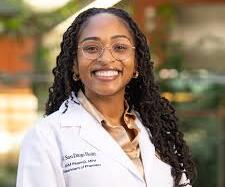
Image of Jess Adkins

Jess Adkins is the Smits Family Professor of Geochemistry and Global Environmental Science at Caltech. He is a chemical oceanographer focused on using trace metals as tracers of environmental processes. His research centers on the geochemical investigation of past climates, particularly across the last few glacial–interglacial cycles spanning several hundred thousand years. This interval is especially valuable because it combines relatively accurate and precise age models—though continually improving—with large climatic shifts that require mechanistic explanation. Prof. Adkins draws on high-resolution climate records, especially from polar ice cores, which reveal both the rapidity and magnitude of past climate change. For instance, oxygen isotope variations from the Greenland Summit over the past 110,000 years serve as a proxy for air temperature. Within this record, the last 10,000 years—the Holocene—stand out for their relative climatic stability compared to the preceding glacial period, which was marked by large and abrupt transitions between cold and warm conditions. As an oceanographer, Adkins aims to understand the coupled ocean–atmosphere system during these shifts, with a particular focus on deep ocean behavior. Much of his work has involved developing deep-sea corals as a novel climate archive, with the potential to significantly expand the types of information available about oceanographic climate change. Adkins currently leads several projects in his lab that are aimed at uncovering the mechanisms behind rapid climate change and long-term climate evolution.

Image
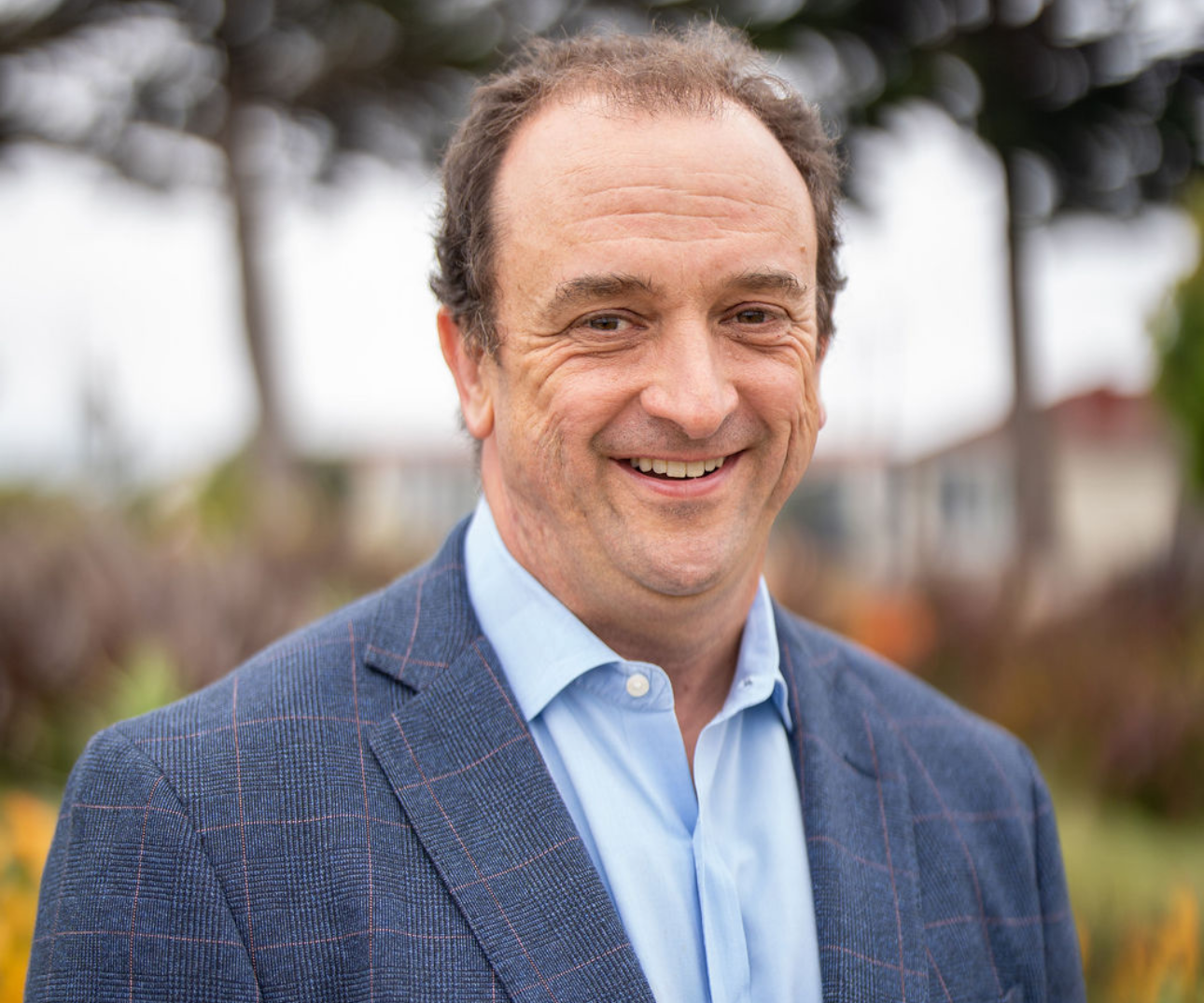
Silvia Del Castillo

Silvia Del Castillo is a sustainability professional with over 10 years of experience and a Master's degree in Sustainability Management from the University of Toronto. She serves as Sustainability Manager at Nefab, a global industrial packaging and logistics services company supporting industries such as Telecom, Datacom, Semicon, Energy, Healthcare Equipment, Mining & Construction, and LiB & E-mobility. In her role, Del Castillo leads corporate sustainability initiatives across the Americas, overseeing carbon reduction, circularity, and sustainability reporting to drive environmental impact. She acts as the primary point of contact for customers on sustainability topics and conducts internal corporate training on Nefab’s Life Cycle Assessment (LCA) tool and climate change. Aligned with Nefab’s purpose to save resources in supply chains, she supports customers in achieving their sustainability targets and is committed to developing and implementing strategies that create measurable impact.

Her talk is titled "Decarbonizing Supply Chains Through Packaging Innovation."


Image
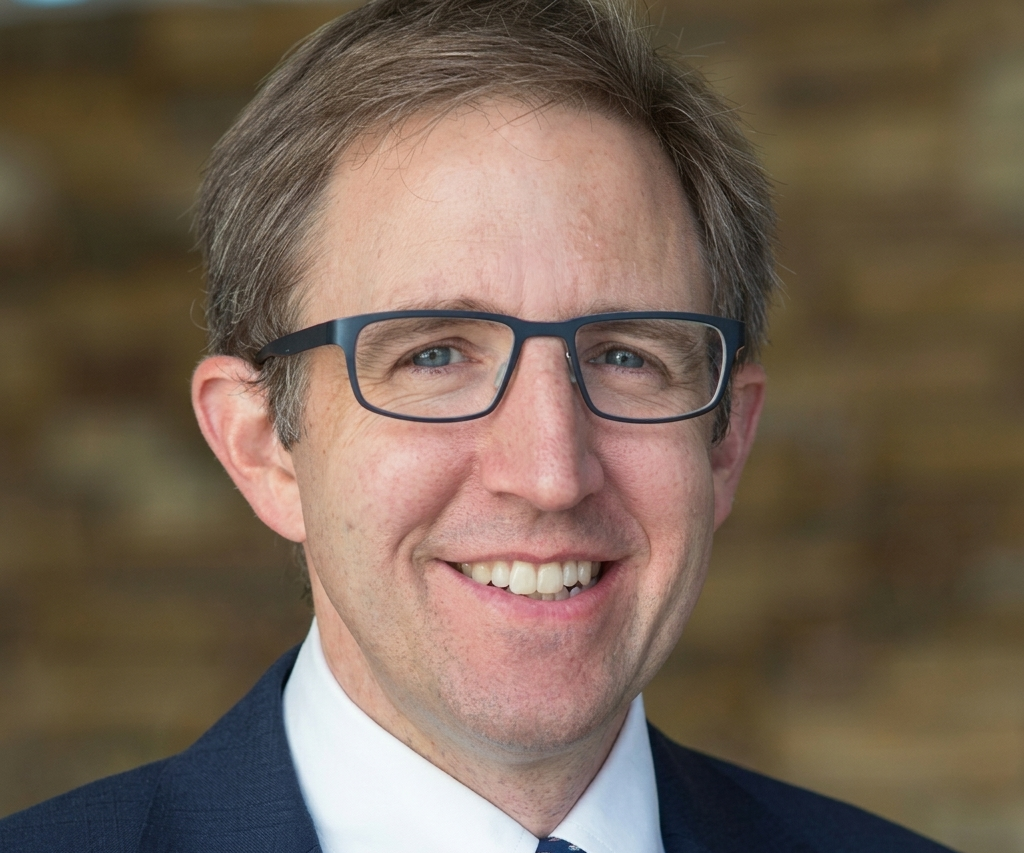
Jeff Simonetti

Jeff Simonetti '05 is the CEO & Founder of the Aqua Exchange, a firm that specializes in water transaction consulting and execution. His firm assists clients in buying and selling water including master planned communities, large agricultural operators, and groundwater sustainability agencies. Simonetti has more than two decades of experience developing public policy and governments affairs strategies, particularly in the land-use, environmental, and water arenas. Prior to founding the Aqua Exchange, Simonetti was the Director of Government Affairs for the Building Industry Association Baldy View Chapter, a residential real estate trade association in Southern California, where he provided advocacy and consulting on a variety of issues including water, greenhouse gas emissions regulations, and state and local regulatory fees associated with homebuilding. He is currently a senior vice president at the Capitol Core Group, an advocacy firm that provides clients advocacy services at the federal, state and local levels. Capitol Core’s areas of expertise include water, infrastructure, renewable energy, and land use. Simonetti earned a bachelor’s degree in PPE from Claremont McKenna College and a master’s degree in finance and entrepreneurship from Boston University.


His talk is titled "From Lettuce to AI: How the Water Crisis is Affecting Everything in the Western US."
 

Image
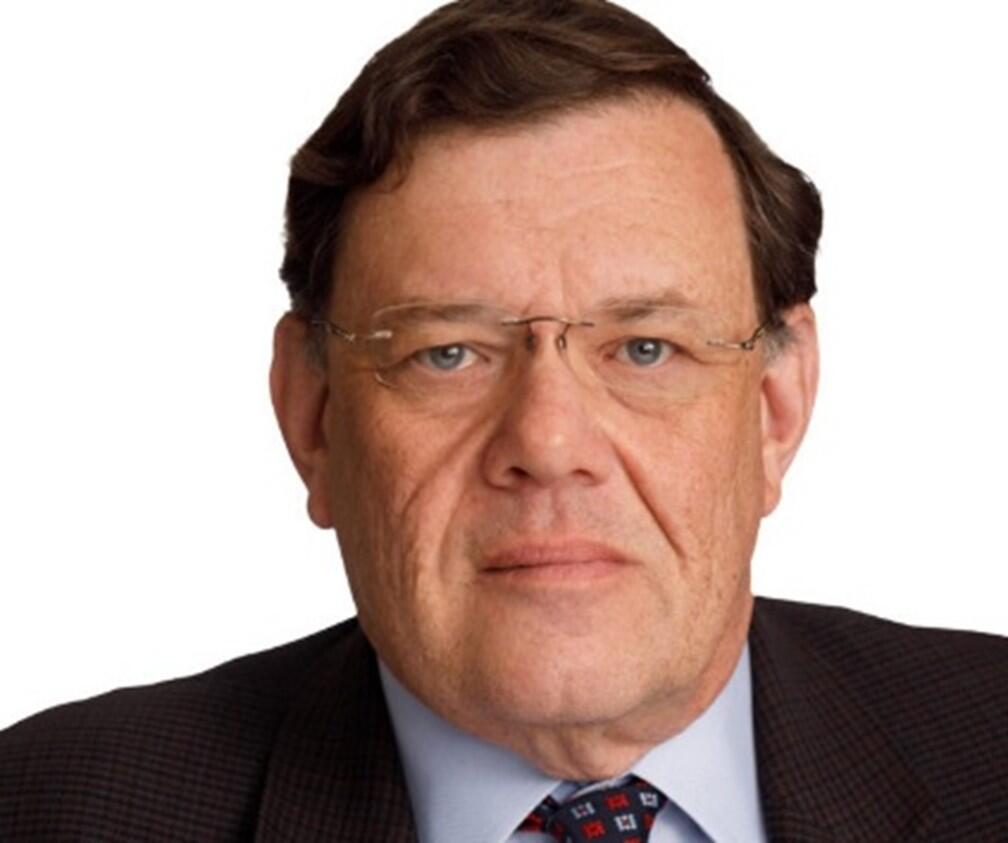
Daniel Weiss

Daniel G. Weiss is Co-Founder and Managing Partner of Angeleno Group LLC (“AG”), a Los Angeles-based venture capital and growth equity firm focused on global investments in next-generation clean energy and climate solutions companies. In addition to his firm management responsibilities, Weiss leads investments and serves on boards of multiple AG portfolio companies. Before the formation of AG in 2001, Weiss was an attorney at O’Melveny & Myers in Los Angeles, working in the firm’s mergers and acquisitions and international and high technology practice groups. He represented multiple Global 1000 clients, including utilities and energy-related companies, in a wide array of private equity and corporate finance transactions. Currently, he serves on boards for several non-profit and educational institutions, including the California Community Foundation, World Resources Institute (where he serves as Vice Chair), Smithsonian National Museum of American History, and UCLA Institute of the Environment and Sustainability Advisory Board (where he serves as co-chair). Previously, Weiss served on the Federal Reserve Bank’s 12th District Economic Advisory Council, Stanford Law School Board of Visitors, and City of Los Angeles Redistricting Commission (appointed by the Honorable Eric Garcetti). Weiss was appointed by President Barack Obama in 2015 to serve as a member of the U.S. Holocaust Memorial Council in Washington, DC. He is a member of the Pacific Council on International Policy and the Council on Foreign Relations. In addition, he has taught, lectured, and published articles on topics of climate finance, sustainability, and the low carbon economy. Weiss holds a JD from Stanford Law School, an MA from Stanford University, and a BA with High Honors from UC Berkeley.

His talk is titled "Peril or Promise: Climate Finance and CleanTech Investment in a New Era of Change."

Please note a SPECIAL SCHEDULE for this program, which is co-organized by the Financial Economics Institute (FEI) and Roberts Environmental Center (REC):

10:30-10:40 AM | Opening Remarks
10:40-11:20 AM | Keynote: Daniel Weiss, "Peril or Promise: Climate Finance and CleanTech Investment in a New Era of Change," followed by Q & A 
11:20-11:30 AM | Short Break
11:30-12:00 PM | Presentation: Silvia del Castillo on "Decarbonizing Supply Chains"
12:00-12:30 PM | Presentation: Jeff Simonetti '05 on "Water Rights"
12:30-1:20 PM | Lunch
1:20-2:00 PM | Keynote: Jess Adkins on Climate Innovation, followed by Q & A 

Read less
Wed, April 8, 2026
Dinner Program
David Armitage

To mark the 250th anniversary of the US Declaration of Independence, David Armitage, Harvard's Lloyd C. Blankfein Professor of History, traces the Declaration's travels around the globe, to show how its meaning for Americans was different from the way other peoples understood it and how the Declaration encouraged the spread of anti-colonialism, opposition to empire, secession and statehood around the world right up to our own time.

Read more about the speaker

David Armitage is a prize-winning writer and teacher who has a worldwide reputation for his historical work. He is currently the Lloyd C. Blankfein Professor of History at Harvard University and an Honorary Fellow of St Catharine's College, Cambridge. 

Armitage has written extensively about the histories of Britain, the British Empire, and the United States, with a particular focus on the international and global trajectory of political ideas. His nineteen books as author or editor include The Ideological Origins of the British Empire (2000), Foundations of Modern International Thought (2014), Civil Wars: A History in Ideas (2017) and, most relevant to the Athenaeum lecture, The Declaration of Independence: A Global History (2007). He is currently working on a study of opera and international law.

Professor Armitage is the inaugural speaker for the Class of 1974 Speaker Series.

Read less

Marian Miner Cook Athenaeum

Claremont McKenna College
385 E. Eighth Street
Claremont, CA 91711

Contact

Phone: (909) 621-8244 
Fax: (909) 621-8579 
Email: