
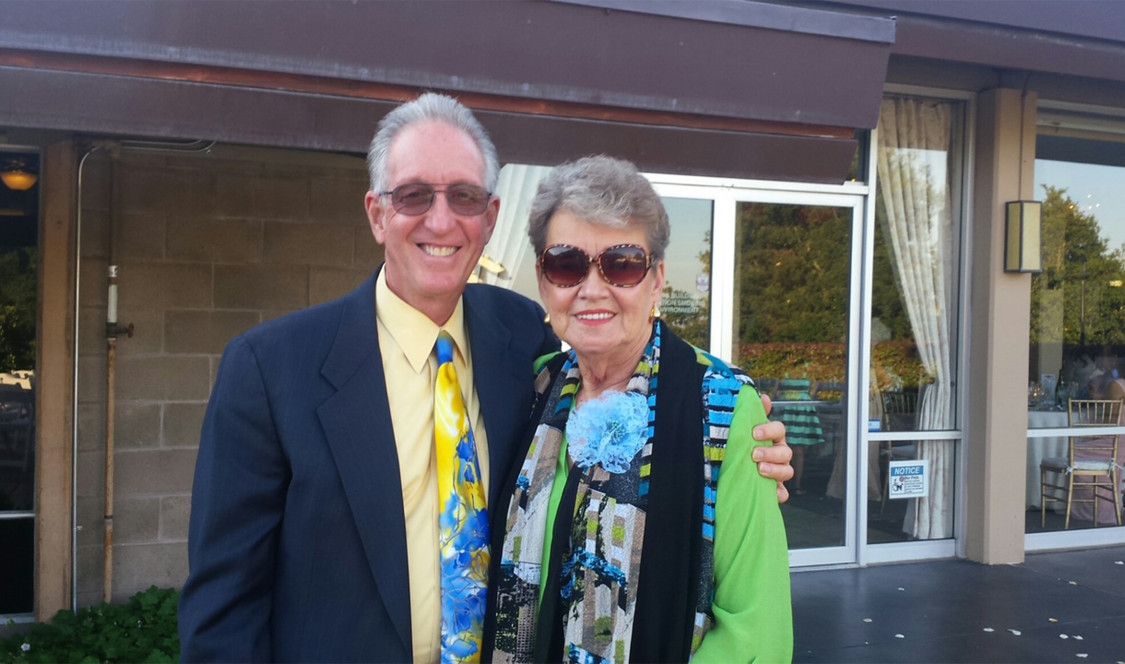
Bob Dills ‘66 has enjoyed a robust and varied military and civilian career path with assignments in Japan, Vietnam, Florida, and California. He and his wife, Nancy, are “Sun Birds” and split their time between a house in Port Charlotte, Florida, and a townhouse in San Jose. Bob treasures his life experiences and believes he has lived and worked in places where good fortune shined upon him exactly where and when he was supposed to be. His military, civilian, and life experiences have blessed him with a list of admirable “Life Lessons Learned,” all would do well to observe and practice. Read on...
Bob Dills’ father went to Dartmouth and his uncle to Amherst, so Bob was expected to consider those two schools, but he was a California boy and wanted a college that was within driving distance of home. He visited CMC and fell in love with the campus...decision made! Bob’s uncle and father had seen military service during WWII. His father had been in the Army Air Corps serving as one of the first photographic Damage Assessment Officers. It was natural then for Bob to join ROTC. As the Vietnam War started to escalate, he believed that the Army needed responsible men to be leaders, and this was the right place for him to be.
While he was an A student in High School, CMC’s students were far more competitive than what he was used to. He found himself having to “buckle down” and apply himself. This became a personality trait he carried forward throughout his life.
At the ROTC summer camp at Ft. Lewis, Washington, between his Junior and Senior years, there was an effort to teach “silent night maneuvers” to the cadets. The leadership of the platoon was periodically changed at various times during the night exercise and Bob was suddenly placed in charge of the unit just as they were to silently attack their objective. Then, at the crest of a hill, one of the cadets had been instructed to start screaming. Bob reacted quickly and threw the man to the ground and tried to silence him, but the man would not stop screaming. So, Bob knocked him out!
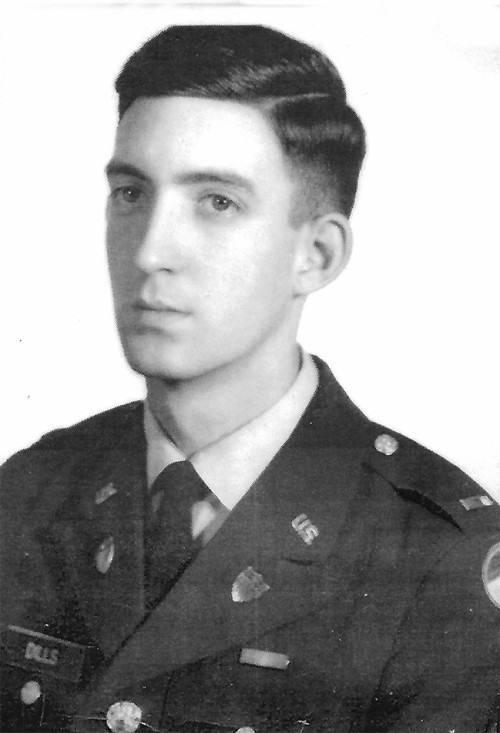
Bob was the Battalion Commander of the CMC Cadet Corps in his senior year and finished as a Distinguished Military Graduate (DMG). He chose the Adjutant General Corps as his branch. Soon after graduation, he found himself at Ft. Benjamin Harrison, Indiana, for the Adjutant General Corps Officer Basic Course. Upon graduation, he was disappointed to receive orders sending him to Rapid City, South Dakota, to be Officer in Charge of a Recruiting Office. Another Lieutenant in his class was disappointed to receive orders transferring him to be a Postal Officer in Japan. The two thought it would be a great idea to switch jobs. Bob saw an opportunity and calling on the confidence he gained from his CMC degree, he called the Office of Personnel Operations in Washington, D.C. He convinced a woman who answered the phone that it would be in the Army’s best interest to switch his orders with the other Lieutenant. A half-hour later the woman came back on the phone and told him “OK, your new orders will follow.”
Bob soon found himself as the Postal Officer at Camp Drake, northwest of Tokyo. After a year, he moved to Camp Zama just west of Tokyo where he was promoted to Captain and served as the U.S. Army Japan Personnel Officer. While he was eligible to apply for discharge 75 days before the end of his tour in Japan, on the 76th day before the end of his tour he received orders transferring him to Vietnam.
After completing additional training at Ft. Knox, Kentucky, and the Jungle Warfare Course in Okinawa, Bob landed at the Tan Son Nhut Airbase in Bien Hoa, Vietnam in May, 1969. This period was post-Tet Offensive, and still a dangerous time in South Vietnam. Bob was assigned as the Night Chief of Casualty Branch and stationed at Long Binh, in III Corps - a large base. His responsibilities included keeping daily statistics on deaths and injuries and resolving any inconsistencies in the numbers. These statistics were forwarded by teletype to Washington on a daily basis, and they had to be exact. He also resolved discrepancies in the letters written by a deceased soldier’s Company Commander and the Division Commander sent to the family after notification by a Casualty Notification Officer. He was also responsible for contacting a soldier to write home when anxious parents expressed worry to their congressman or the soldier’s Division Commander having not received a letter from their son in some time and feared the worst.
After six months in this job, Bob was transferred to the 101st Airborne Division located at the Camp Eagle Fire Base near Hue in I Corps. There he served as the Special Services Officer providing entertainment to the troops, mostly Filipino singing groups, and showing 35mm movies to be viewed by fire base personnel when conditions were safe.
Asked about interesting experiences in Vietnam, Bob mentions organizing a soccer game between local ARVN soldiers (Army of the Republic of Vietnam) and Americans at a local school. The Americans were soundly defeated much to the joy of the locals who attended. Bob learned later that the ARVNs had hand-picked their team to include simi-pros. As for close calls, Bob cited that on one occasion he came close to danger when his Fire Base at Long Binh was indiscriminately shelled by mortars and 122mm rockets. While huddling in a shelter, he listened as five rocket explosions came closer and closer - walking toward his position. “Fortunately, there was no sixth rocket, but the 5th one was close enough!” he concludes.
Next, we find Bob returning to the U.S. and ending his active-duty service. His father had worked for what was then Pacific Tel & Tel and Bob took an entry level management position as a Plant Service Foreman with 10-14 people reporting to him. After a year, he became a permanent employee and moved to supervise business installers. At this point, Business Installation was now his responsibility and dealing with more complex installations and equipment as his team worked to provide phone service to large corporate facilities. After another “first level management” position, Bob was promoted to the “second level of management” where he supervised an administrative center that provided installation and repair services to more than 135,000 customers. Three years later, he was promoted to District Manager, responsible for all installation and repair activities for the eastern half of San Jose and the southern portion of the east side of San Francisco Bay area. He was also responsible for the implementation of the computerization of hundreds of thousands of manual records recorded on individual cards. Each card was an individual record of a telephone installation - all organized by phone number. Bob oversaw the keypunching of the information that was performed in the Dominican Republic as well as the purging of errors. Then, after 2 years, he moved up to the corporate headquarters as the District Staff Manager with full responsibility for supporting all residential installation and maintenance within the State of California. In 1984, with the “breakup of the Bell System monopoly,” the company began to change from a regulated monopoly to the regulated portion of an independent company (then called Pacific Telesis). For the first time the organization began to face stiff competition in the marketplace.
Recognizing that “close coordination among divisions” was not going to work, Bob was promoted to Division Manager where he created a statewide division to coordinate all services for medium and large corporations when the customer experienced a large change in service requirements. This was a stressful time as he assumed major coordination responsibilities. It was common for him to receive frantic phone calls at home at 2 AM from his Service Managers who were flummoxed after having tried everything to solve an unhappy company’s communications problem. He served in this hot seat for 2 years and took pleasure in establishing the reputation of being a manager who could solve problems effectively and quickly
Bob chose his subordinates well and found that good people worked effectively in the new fluid environment. His management style included making sure he established clear goals and expectations within his staff including metrics assigned to evaluate progress. He also took time to coach, train, and mentor his staff, realizing that if an employee did not know how to perform a task, he certainly could not be called on to do the work. His focus remained on discovering the issue behind a customer’s problem and then fixing it.
Then, he was called back to the Corporate Headquarters as Division Staff Manager, with 4 direct reports. In this role his responsibility was to provide telephone services to the offices of more than 100K employees within Pacific Tel and many hundreds of physical office locations throughout the state. Finally, Bob was assigned to a small, multi-disciplinary team of experienced managers who were asked to create a new business model for how the growing company should be organized. He is proud of conceptualizing a small team approach to meet the changing market needs that was ultimately adapted.
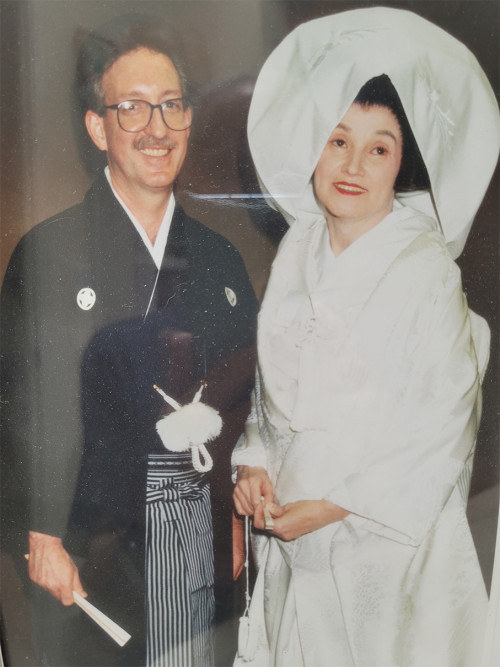
Bob took early retirement at the end of 1989 and was approached by his former boss, asking him to come to Japan for a two year stint as Managing Director, to help build a new Japanese digital cellular company and network. Bob and Nancy made the jump to living and working within an exclusively Japanese community, immersing themselves in the language and culture. Two years turned into six and they loved the experience of being the first and only foreigners in the community in which they lived. Bob took the new company from an original group of 24 to more than 500: all Japanese and one American! Bob and Nancy found the experience eye-opening. It taught them to appreciate what we have in the U.S. and how to adapt and be flexible. They made many Japanese friends and remained in contact with many.
Bob’s last assignment upon return to the U. S. in 1966 was to work for their son in the development of a network cabling/data/business telephone system business located in San Jose. In 2000, living near Lake Tahoe, the couple decided to move to a sunnier and more humid climate in Port Charlotte, Florida. They became “Sun Birds” living in a house in Florida for 7 months and for 5 in a townhouse in San Jose.
For the past 20+ years, Bob has become deeply involved from both a philanthropic and construction point of view in the rehabilitation of several churches about to fail. Since becoming “saved” as an enthusiastic follower of the Lord Jesus Christ, Bob has become an Ordained Deacon and worked tirelessly to help rebuild and grow three churches, one in Florida and two in San Jose. The work has brought great personal pleasure and intrinsic rewards. He’s done everything from knocking down walls to changing light bulbs!
Bob notes that the past year has been a medical nightmare for Nancy, but the couple refuses to feel sorry for themselves. They continue to work through the medical issues with positivism and faith.
We should all learn from Bob’s “Life Lessons Learned” as they speak to the heart of the characteristics and traits that provide for a meaningful and successful life:
- Family comes first. It is important to capture and maintain lasting memories, not just in phones and databases, but in physical scrap books and albums to be passed on to future generations.
- Develop good work habits early. Buckle down and learn your trade.
- Expect the unexpected and don’t be afraid to accept a challenge that takes you out of your comfort zone.
- Flexibility and adaptation to one’s environment is a key element for personal growth, knowledge, and development.
- Having faith and a positive attitude help one to face life’s greatest challenges.